
 Image 1 of 1
ウェルネス金継ぎワークショップ
Wellness Kintsugi Workshop
Creatively mending the broken places in our lives
Facilitated by Makiko Harada (Y), MA, MPS, ATR-BC, LCAT
President, New York Art Therapy Association
“There is a crack in everything
That’s how the light gets in.”
— “Anthem,”Leonard Cohen
All of us carry something we feel ashamed of—emotional or physical wounds, scars, or past trauma. In our society, we are often taught to view these parts of ourselves as negative or lacking value—as the “darkness” of life.
But what if these experiences are not something to hide or fix, but something to integrate?
How might we begin to bring our darkness into relationship with the light?
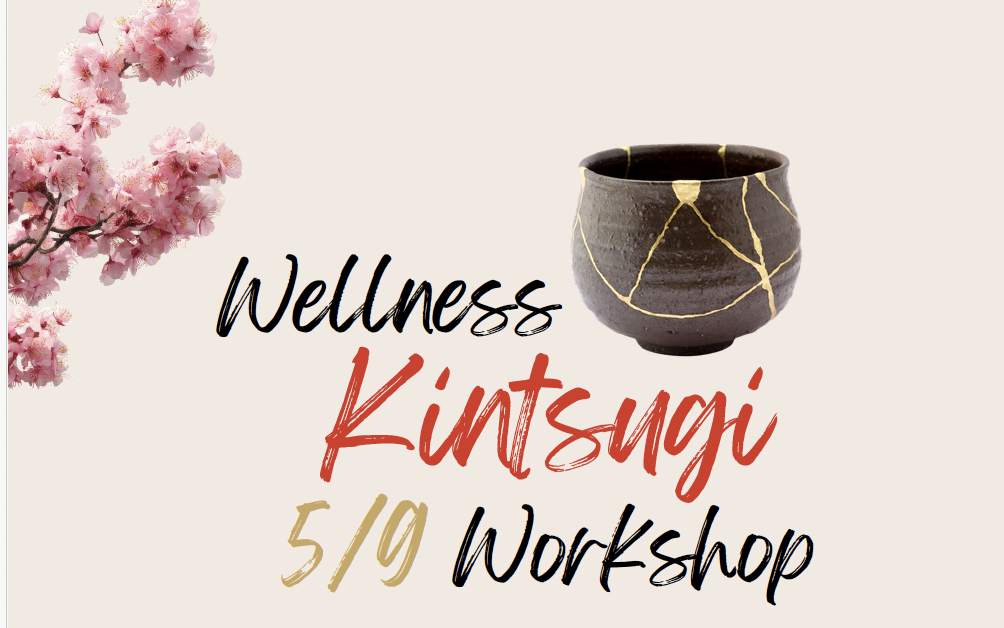
Kintsugi is a Japanese art form, over 400 years old, used to repair broken pottery with gold. Rather than disguising cracks, it highlights them—transforming what was broken into something newly meaningful and beautiful.
This practice is not about returning something to how it once was. Instead, it invites a shift in perspective—an opportunity to see brokenness not as failure, but as part of a new story.
In recent years, this philosophy—often referred to as the “kintsugi spirit”—has gained traction within mental health spaces in the U.S. as a powerful metaphor for healing and resilience.
In this experiential art therapy workshop, participants are invited to explore and embody the principles of kintsugi through creative practice and reflection. Together, we will consider:
What does it mean to heal?
Does healing mean returning to who we once were—or becoming something new?
How can we relate to our wounds with compassion and creativity?
During the experiential portion, participants will be invited to choose one of two pathways:
Bring a personal broken object and explore the process of repair as a way of “breathing new life” into it, or
Use basic art materials (such as paper, markers, or clay) to explore themes of spiritual mending through creative expression.
Introduce foundational concepts of art therapy
Explore and appreciate the cultural roots of kintsugi
Re-examine personal definitions of healing
Makiko Harada (Y), MA, MPS, ATR-BC, LCAT
President, New York Art Therapy Association
Board-certified and New York State licensed art therapist
MA in Health Education, Teachers College, Columbia University
MPS in Art Therapy, Pratt Institute
ウェルネス金継ぎワークショップ
Wellness Kintsugi Workshop
Creatively mending the broken places in our lives
Facilitated by Makiko Harada (Y), MA, MPS, ATR-BC, LCAT
President, New York Art Therapy Association
“There is a crack in everything
That’s how the light gets in.”
— “Anthem,”Leonard Cohen
All of us carry something we feel ashamed of—emotional or physical wounds, scars, or past trauma. In our society, we are often taught to view these parts of ourselves as negative or lacking value—as the “darkness” of life.
But what if these experiences are not something to hide or fix, but something to integrate?
How might we begin to bring our darkness into relationship with the light?
Kintsugi is a Japanese art form, over 400 years old, used to repair broken pottery with gold. Rather than disguising cracks, it highlights them—transforming what was broken into something newly meaningful and beautiful.
This practice is not about returning something to how it once was. Instead, it invites a shift in perspective—an opportunity to see brokenness not as failure, but as part of a new story.
In recent years, this philosophy—often referred to as the “kintsugi spirit”—has gained traction within mental health spaces in the U.S. as a powerful metaphor for healing and resilience.
In this experiential art therapy workshop, participants are invited to explore and embody the principles of kintsugi through creative practice and reflection. Together, we will consider:
What does it mean to heal?
Does healing mean returning to who we once were—or becoming something new?
How can we relate to our wounds with compassion and creativity?
During the experiential portion, participants will be invited to choose one of two pathways:
Bring a personal broken object and explore the process of repair as a way of “breathing new life” into it, or
Use basic art materials (such as paper, markers, or clay) to explore themes of spiritual mending through creative expression.
Introduce foundational concepts of art therapy
Explore and appreciate the cultural roots of kintsugi
Re-examine personal definitions of healing
Makiko Harada (Y), MA, MPS, ATR-BC, LCAT
President, New York Art Therapy Association
Board-certified and New York State licensed art therapist
MA in Health Education, Teachers College, Columbia University
MPS in Art Therapy, Pratt Institute